


Main article: Automobile industry in the United States
|
|
|---|
Showing posts with label History. Show all posts
Showing posts with label History. Show all posts
Wednesday, May 13, 2009

South Korea
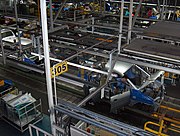
South Korea
South Korea
South Korea
Japan
Japan, with its large population squeezed into very high density cities with good public transit, has limited roadways that carry very heavy traffic. Hence most automobiles are small in terms of size and weight. From a humble beginning, Japan is now the biggest auto manufacturing country in the world. Nissan began making trucks in 1914, and sold cars under the Datsun brand until it switched to Nissan in the 1980s. It opened its first U.S. plant in Tennessee in the early 1980s and a U.K. plant in 1986. Its luxury models carry the brand Infiniti. Honda, which began with motorcycles, emerged after World War II. Its luxury vehicles are sold under the Acura brand. Toyota began making cars in the 1930s and is now the world's largest producer. Its luxury models carry the Lexus brand. Toyota is famous for its innovative, quality-conscious management style, and its hybrid gas-electric vehicles, especially the Prius, which was launched in 1997. Other major companies include Subaru, Mitsubishi, Mazda, Suzuki, and Isuzu. Japan became the world's leading auto maker in 1980,[citation needed] the first year since 1905 that the United States had been outproduced by any other nation.
Japan
Japan, with its large population squeezed into very high density cities with good public transit, has limited roadways that carry very heavy traffic. Hence most automobiles are small in terms of size and weight. From a humble beginning, Japan is now the biggest auto manufacturing country in the world. Nissan began making trucks in 1914, and sold cars under the Datsun brand until it switched to Nissan in the 1980s. It opened its first U.S. plant in Tennessee in the early 1980s and a U.K. plant in 1986. Its luxury models carry the brand Infiniti. Honda, which began with motorcycles, emerged after World War II. Its luxury vehicles are sold under the Acura brand. Toyota began making cars in the 1930s and is now the world's largest producer. Its luxury models carry the Lexus brand. Toyota is famous for its innovative, quality-conscious management style, and its hybrid gas-electric vehicles, especially the Prius, which was launched in 1997. Other major companies include Subaru, Mitsubishi, Mazda, Suzuki, and Isuzu. Japan became the world's leading auto maker in 1980,[citation needed] the first year since 1905 that the United States had been outproduced by any other nation.
Japan
Japan, with its large population squeezed into very high density cities with good public transit, has limited roadways that carry very heavy traffic. Hence most automobiles are small in terms of size and weight. From a humble beginning, Japan is now the biggest auto manufacturing country in the world. Nissan began making trucks in 1914, and sold cars under the Datsun brand until it switched to Nissan in the 1980s. It opened its first U.S. plant in Tennessee in the early 1980s and a U.K. plant in 1986. Its luxury models carry the brand Infiniti. Honda, which began with motorcycles, emerged after World War II. Its luxury vehicles are sold under the Acura brand. Toyota began making cars in the 1930s and is now the world's largest producer. Its luxury models carry the Lexus brand. Toyota is famous for its innovative, quality-conscious management style, and its hybrid gas-electric vehicles, especially the Prius, which was launched in 1997. Other major companies include Subaru, Mitsubishi, Mazda, Suzuki, and Isuzu. Japan became the world's leading auto maker in 1980,[citation needed] the first year since 1905 that the United States had been outproduced by any other nation.
Japan
Japan, with its large population squeezed into very high density cities with good public transit, has limited roadways that carry very heavy traffic. Hence most automobiles are small in terms of size and weight. From a humble beginning, Japan is now the biggest auto manufacturing country in the world. Nissan began making trucks in 1914, and sold cars under the Datsun brand until it switched to Nissan in the 1980s. It opened its first U.S. plant in Tennessee in the early 1980s and a U.K. plant in 1986. Its luxury models carry the brand Infiniti. Honda, which began with motorcycles, emerged after World War II. Its luxury vehicles are sold under the Acura brand. Toyota began making cars in the 1930s and is now the world's largest producer. Its luxury models carry the Lexus brand. Toyota is famous for its innovative, quality-conscious management style, and its hybrid gas-electric vehicles, especially the Prius, which was launched in 1997. Other major companies include Subaru, Mitsubishi, Mazda, Suzuki, and Isuzu. Japan became the world's leading auto maker in 1980,[citation needed] the first year since 1905 that the United States had been outproduced by any other nation.
Germany
The automobile was invented in Germany by Carl Benz. Furthermore, the four-stroke internal combustion engine used in most automobiles worldwide today was invented by Nikolaus Otto in Germany. In addition, the diesel engine was also invented by German Rudolf Diesel. On the one hand, Germany is famous for the high-performance and high-quality sports cars made by Porsche, on the other hand, the cars by Mercedes-Benz are famous for their quality, safety and innovativeness. Daimler-Benz is the industry's oldest firm, building automobiles since the late 1880s;[citation needed] its current structure dates from 1926. In 1998 it bought the American automobile manufacturer Chrysler, then sold out in 2007 at a heavy loss as it never managed bring the division to long term profitability.
In the popular market, Opel and Volkswagen are most well known. Opel was a bicycle company that started making cars in 1898; General Motors bought it out in 1929, but the Nazi government took control and GM wrote off its entire investment. In 1948 GM returned and restored the Opel brand.
Volkswagen is dominant in the popular market; it purchased Audi in 1964. VW's most famous car was the small, beetle-shaped economical "people's car" with a rear-mounted, air-cooled engine. It was designed in the 1930s by Ferdinand Porsche upon orders from Adolf Hitler, who was himself a car enthusiast. However production models appeared only after the war; until then only rich Germans had automobiles. By 1950 Volkswagen was the largest German automobile producer, today, it is one of the three biggest automotive companies, but it is now part of the Porsche Automobil Holding SE. In the meantime, ten different car manufacturers belong to the multicorporate enterprise: Porsche, Volkswagen, Audi, Bugatti, Lamborghini, Bentley, Škoda Auto, MAN, SEAT and Scania AB.
Germany is famous for its upscale sedans. They feature suspension systems that provide both a soft ride and good handling characteristics. Many manufacturers limit their automobiles electronically to driving speeds of 250 km/h (155 mph) for safety reasons.[citation needed]
Daimler AG produces the upscale Mercedes-Benz, long a famous name in racing, as well as the innovative city vehicle Smart. BMW (founded 1916), Audi and Porsche are major factors in the sportive luxury market worldwide. Porsche formed his own company, which today produces expensive, high-quality sports cars. In 2008 the Porsche company sought control of the much larger Volkswagen company; Porsche cornered the market for Volkswagen stock and made profits of tens of billions of Euros, while apparently gaining control of the bigger
Germany
The automobile was invented in Germany by Carl Benz. Furthermore, the four-stroke internal combustion engine used in most automobiles worldwide today was invented by Nikolaus Otto in Germany. In addition, the diesel engine was also invented by German Rudolf Diesel. On the one hand, Germany is famous for the high-performance and high-quality sports cars made by Porsche, on the other hand, the cars by Mercedes-Benz are famous for their quality, safety and innovativeness. Daimler-Benz is the industry's oldest firm, building automobiles since the late 1880s;[citation needed] its current structure dates from 1926. In 1998 it bought the American automobile manufacturer Chrysler, then sold out in 2007 at a heavy loss as it never managed bring the division to long term profitability.
In the popular market, Opel and Volkswagen are most well known. Opel was a bicycle company that started making cars in 1898; General Motors bought it out in 1929, but the Nazi government took control and GM wrote off its entire investment. In 1948 GM returned and restored the Opel brand.
Volkswagen is dominant in the popular market; it purchased Audi in 1964. VW's most famous car was the small, beetle-shaped economical "people's car" with a rear-mounted, air-cooled engine. It was designed in the 1930s by Ferdinand Porsche upon orders from Adolf Hitler, who was himself a car enthusiast. However production models appeared only after the war; until then only rich Germans had automobiles. By 1950 Volkswagen was the largest German automobile producer, today, it is one of the three biggest automotive companies, but it is now part of the Porsche Automobil Holding SE. In the meantime, ten different car manufacturers belong to the multicorporate enterprise: Porsche, Volkswagen, Audi, Bugatti, Lamborghini, Bentley, Škoda Auto, MAN, SEAT and Scania AB.
Germany is famous for its upscale sedans. They feature suspension systems that provide both a soft ride and good handling characteristics. Many manufacturers limit their automobiles electronically to driving speeds of 250 km/h (155 mph) for safety reasons.[citation needed]
Daimler AG produces the upscale Mercedes-Benz, long a famous name in racing, as well as the innovative city vehicle Smart. BMW (founded 1916), Audi and Porsche are major factors in the sportive luxury market worldwide. Porsche formed his own company, which today produces expensive, high-quality sports cars. In 2008 the Porsche company sought control of the much larger Volkswagen company; Porsche cornered the market for Volkswagen stock and made profits of tens of billions of Euros, while apparently gaining control of the bigger
Germany
The automobile was invented in Germany by Carl Benz. Furthermore, the four-stroke internal combustion engine used in most automobiles worldwide today was invented by Nikolaus Otto in Germany. In addition, the diesel engine was also invented by German Rudolf Diesel. On the one hand, Germany is famous for the high-performance and high-quality sports cars made by Porsche, on the other hand, the cars by Mercedes-Benz are famous for their quality, safety and innovativeness. Daimler-Benz is the industry's oldest firm, building automobiles since the late 1880s;[citation needed] its current structure dates from 1926. In 1998 it bought the American automobile manufacturer Chrysler, then sold out in 2007 at a heavy loss as it never managed bring the division to long term profitability.
In the popular market, Opel and Volkswagen are most well known. Opel was a bicycle company that started making cars in 1898; General Motors bought it out in 1929, but the Nazi government took control and GM wrote off its entire investment. In 1948 GM returned and restored the Opel brand.
Volkswagen is dominant in the popular market; it purchased Audi in 1964. VW's most famous car was the small, beetle-shaped economical "people's car" with a rear-mounted, air-cooled engine. It was designed in the 1930s by Ferdinand Porsche upon orders from Adolf Hitler, who was himself a car enthusiast. However production models appeared only after the war; until then only rich Germans had automobiles. By 1950 Volkswagen was the largest German automobile producer, today, it is one of the three biggest automotive companies, but it is now part of the Porsche Automobil Holding SE. In the meantime, ten different car manufacturers belong to the multicorporate enterprise: Porsche, Volkswagen, Audi, Bugatti, Lamborghini, Bentley, Škoda Auto, MAN, SEAT and Scania AB.
Germany is famous for its upscale sedans. They feature suspension systems that provide both a soft ride and good handling characteristics. Many manufacturers limit their automobiles electronically to driving speeds of 250 km/h (155 mph) for safety reasons.[citation needed]
Daimler AG produces the upscale Mercedes-Benz, long a famous name in racing, as well as the innovative city vehicle Smart. BMW (founded 1916), Audi and Porsche are major factors in the sportive luxury market worldwide. Porsche formed his own company, which today produces expensive, high-quality sports cars. In 2008 the Porsche company sought control of the much larger Volkswagen company; Porsche cornered the market for Volkswagen stock and made profits of tens of billions of Euros, while apparently gaining control of the bigger
Germany
The automobile was invented in Germany by Carl Benz. Furthermore, the four-stroke internal combustion engine used in most automobiles worldwide today was invented by Nikolaus Otto in Germany. In addition, the diesel engine was also invented by German Rudolf Diesel. On the one hand, Germany is famous for the high-performance and high-quality sports cars made by Porsche, on the other hand, the cars by Mercedes-Benz are famous for their quality, safety and innovativeness. Daimler-Benz is the industry's oldest firm, building automobiles since the late 1880s;[citation needed] its current structure dates from 1926. In 1998 it bought the American automobile manufacturer Chrysler, then sold out in 2007 at a heavy loss as it never managed bring the division to long term profitability.
In the popular market, Opel and Volkswagen are most well known. Opel was a bicycle company that started making cars in 1898; General Motors bought it out in 1929, but the Nazi government took control and GM wrote off its entire investment. In 1948 GM returned and restored the Opel brand.
Volkswagen is dominant in the popular market; it purchased Audi in 1964. VW's most famous car was the small, beetle-shaped economical "people's car" with a rear-mounted, air-cooled engine. It was designed in the 1930s by Ferdinand Porsche upon orders from Adolf Hitler, who was himself a car enthusiast. However production models appeared only after the war; until then only rich Germans had automobiles. By 1950 Volkswagen was the largest German automobile producer, today, it is one of the three biggest automotive companies, but it is now part of the Porsche Automobil Holding SE. In the meantime, ten different car manufacturers belong to the multicorporate enterprise: Porsche, Volkswagen, Audi, Bugatti, Lamborghini, Bentley, Škoda Auto, MAN, SEAT and Scania AB.
Germany is famous for its upscale sedans. They feature suspension systems that provide both a soft ride and good handling characteristics. Many manufacturers limit their automobiles electronically to driving speeds of 250 km/h (155 mph) for safety reasons.[citation needed]
Daimler AG produces the upscale Mercedes-Benz, long a famous name in racing, as well as the innovative city vehicle Smart. BMW (founded 1916), Audi and Porsche are major factors in the sportive luxury market worldwide. Porsche formed his own company, which today produces expensive, high-quality sports cars. In 2008 the Porsche company sought control of the much larger Volkswagen company; Porsche cornered the market for Volkswagen stock and made profits of tens of billions of Euros, while apparently gaining control of the bigger
China
China's automobile industry is in rapid development since the year 2000. In 2008, 9.345 million motor vehicles were manufactured in China, surpassing United States as the second largest automobile maker, after Japan. Moreover, due to the current financial crisis, China is the largest automobile market in the world for the first four months of year 2009, with total sale of 3.84 million vehicles. China may surpass United States and become the largest car market for the whole year of 2009. The top 5 car sellers are Volkswagen, GM, Toyota, Nissan and Chery.
China
China's automobile industry is in rapid development since the year 2000. In 2008, 9.345 million motor vehicles were manufactured in China, surpassing United States as the second largest automobile maker, after Japan. Moreover, due to the current financial crisis, China is the largest automobile market in the world for the first four months of year 2009, with total sale of 3.84 million vehicles. China may surpass United States and become the largest car market for the whole year of 2009. The top 5 car sellers are Volkswagen, GM, Toyota, Nissan and Chery.
China
China's automobile industry is in rapid development since the year 2000. In 2008, 9.345 million motor vehicles were manufactured in China, surpassing United States as the second largest automobile maker, after Japan. Moreover, due to the current financial crisis, China is the largest automobile market in the world for the first four months of year 2009, with total sale of 3.84 million vehicles. China may surpass United States and become the largest car market for the whole year of 2009. The top 5 car sellers are Volkswagen, GM, Toyota, Nissan and Chery.
China
China's automobile industry is in rapid development since the year 2000. In 2008, 9.345 million motor vehicles were manufactured in China, surpassing United States as the second largest automobile maker, after Japan. Moreover, due to the current financial crisis, China is the largest automobile market in the world for the first four months of year 2009, with total sale of 3.84 million vehicles. China may surpass United States and become the largest car market for the whole year of 2009. The top 5 car sellers are Volkswagen, GM, Toyota, Nissan and Chery.
Subscribe to:
Comments (Atom)


