Showing posts with label Sedans. Show all posts

Wednesday, December 15, 2010

2011 Vauxhall VXR8


Vauxhall has revealed its new 2011 VXR8. These first official pictures of the VXR8 show an edgier and more aggressive look over the model it replaces. But it's way more expensive, too.

The VXR8 is based on the Holden Commodore, but instead of the hot ClubSport R8 model on which the previous Vauxhall was based, the new model starts with the new E3 GTS just launched in Australia. That means a 6.2-liter LS3 V8 with 425 horsepower and 405 lb-ft of torque – kept in line by new Magnetic Ride Control and Launch Control systems, driving through a six-speed transmission (automatic or manual) and a mechanical diff – for a 4.9-second sprint to 60 mph and an electronically-limited top speed of 155 mph.

Afresh, ‘Shockwave’ grille, LED day running lights and sleek fresh wing-vents mark the fresh auto away by the front, while the rear characteristics afresh ‘Superflow’ rear spoiler, LED taillights and twin deplete tips that mime the shape of the face grille.

Vauxhall VXR8 has also employed the Magnetic Ride Control (MRC) which adapts to road conditions 1000 times per second, together with the Launch Control feature which engages when the driver sets the Electronic Stability Control in Competition Mode. 

2011 Vauxhall VXR8 is priced at at £49 500.


2011 Vauxhall VXR82011 Vauxhall VXR82011 Vauxhall VXR82011 Vauxhall VXR82011 Vauxhall VXR82011 Vauxhall VXR8


Press Release

REAR-DRIVE, 6.2-LITRE V8, SUB-£50K: IT HAS TO BE THE NEW VXR8!

  • New VXR8 hits UK dealers next March, based on higher-spec GTS model
  • Re-designed exterior and new interior with full leather trim as standard
  • Magnetic Ride Control & Launch Control complement 431PS V8 powertrain
Luton – Vauxhall's storming VXR8 model is back with a vengeance, packing heavily revised front- and rear-end styling, a new cabin and a raft of new technology to enhance its appeal to drivers in search of one of the last, great rear-drive V8 super-saloons.

Priced at £49,500 (inc. 20 per cent VAT) and available to order later this month, the new VXR8 is now based on HSV's E3 GTS model, just launched in Australia, the previous VXR8 representing the old version of the lower-spec ClubSport R8. That means it still undercuts full-size super saloons like the Audi RS6, Jaguar XFR and Mercedes E63 AMG by between £13k and £29k, and even performance saloons from the class below, such as the BMW M3 and Mercedes C63 AMG.

A new, 'Shockwave' grille, LED daytime running lights and sleek new wing-vents mark the new car out from the front, while the rear features a new 'Superflow' rear spoiler, LED tail lamps and twin exhaust tips that mimic the shape of the front grille. As you can see from these first official press shots of our Hazard Yellow car, the new VXR8 will never blend into the scenery!

As before, the new VXR8's race-bred chassis uses MacPherson struts/progressive rate coil springs at the front and a multi-link independent set-up at the rear. But for the first time on a VXR8, Vauxhall has employed Magnetic Ride Control (MRC), a suspension system which adapts up to 1000 times a seconds to road conditions and driver inputs. Based on technology used in GM's current Corvette ZR1 supercar, MRC works by sending an electric current through damper units filled with 'soft' magnetic particles. These particles harden as the input reaches its maximum value, providing drivers with exceptional levels of ride, handling and stopping power.

Complementing the new VXR8's MRC is Launch Control, which is engaged when drivers select the ESC's (Electronic Stability Control) Competition Mode. The system dictates the level of torque delivered to the rear wheels for maximum acceleration, according to surface conditions. All the driver has to do is floor the throttle and let the car do the rest. Extensive testing has proved that LC results in acceleration runs no more than 0.1 second apart.

Of course, no VXR8 would be complete without a large-capacity V8, and this latest version doesn't disappoint. The fourth generation 6.2-litre LS3 unit produces 431PS and a massive 550Nm of torque, enough to propel the VXR8 from 0-60mph in 4.9 seconds and on to a governed top speed of 155mph. As before, drive is delivered to the rear axle via either a six-speed manual or auto transmission, working through a mechanical limited slip differential.

Inside, the new VXR8 has undergone a transformation. Full leather trim is now standard, and front occupants are cocooned in special HSV Performance Seats with eight-way adjustability. A new instrument cluster and surround, centre stack and switchgear provide a cleaner and more integrated look, while standard equipment also includes Aux-in/USB inputs, iPod support and Bluetooth with phone book display and touch-screen dialling.

But for drivers who want to engage with their VXR8 like never before, Vauxhall has introduced EDI, or Enhanced Driver Interface. EDI connects with the on-board computer to constantly stream real-time vehicle dynamics and performance to the car's main 5-inch monitor. At the touch of the screen, drivers can access a variety of data such as vehicle G-forces, power and torque and lap times – even the degree to which their VXR8 is drifting. Completing the clever package is the ability for drivers to download data, such as track day performance, and analyse it using the MOTEC i2 software provided.

Befitting its exclusivity, the VXR8 is now available through just six highly specialist VXR dealers in the UK, though a total of 34 VXR outlets will be authorised to maintain the model.

2011 Vauxhall VXR8


Vauxhall has revealed its new 2011 VXR8. These first official pictures of the VXR8 show an edgier and more aggressive look over the model it replaces. But it's way more expensive, too.

The VXR8 is based on the Holden Commodore, but instead of the hot ClubSport R8 model on which the previous Vauxhall was based, the new model starts with the new E3 GTS just launched in Australia. That means a 6.2-liter LS3 V8 with 425 horsepower and 405 lb-ft of torque – kept in line by new Magnetic Ride Control and Launch Control systems, driving through a six-speed transmission (automatic or manual) and a mechanical diff – for a 4.9-second sprint to 60 mph and an electronically-limited top speed of 155 mph.

Afresh, ‘Shockwave’ grille, LED day running lights and sleek fresh wing-vents mark the fresh auto away by the front, while the rear characteristics afresh ‘Superflow’ rear spoiler, LED taillights and twin deplete tips that mime the shape of the face grille.

Vauxhall VXR8 has also employed the Magnetic Ride Control (MRC) which adapts to road conditions 1000 times per second, together with the Launch Control feature which engages when the driver sets the Electronic Stability Control in Competition Mode. 

2011 Vauxhall VXR8 is priced at at £49 500.


2011 Vauxhall VXR82011 Vauxhall VXR82011 Vauxhall VXR82011 Vauxhall VXR82011 Vauxhall VXR82011 Vauxhall VXR8


Press Release

REAR-DRIVE, 6.2-LITRE V8, SUB-£50K: IT HAS TO BE THE NEW VXR8!

  • New VXR8 hits UK dealers next March, based on higher-spec GTS model
  • Re-designed exterior and new interior with full leather trim as standard
  • Magnetic Ride Control & Launch Control complement 431PS V8 powertrain
Luton – Vauxhall's storming VXR8 model is back with a vengeance, packing heavily revised front- and rear-end styling, a new cabin and a raft of new technology to enhance its appeal to drivers in search of one of the last, great rear-drive V8 super-saloons.

Priced at £49,500 (inc. 20 per cent VAT) and available to order later this month, the new VXR8 is now based on HSV's E3 GTS model, just launched in Australia, the previous VXR8 representing the old version of the lower-spec ClubSport R8. That means it still undercuts full-size super saloons like the Audi RS6, Jaguar XFR and Mercedes E63 AMG by between £13k and £29k, and even performance saloons from the class below, such as the BMW M3 and Mercedes C63 AMG.

A new, 'Shockwave' grille, LED daytime running lights and sleek new wing-vents mark the new car out from the front, while the rear features a new 'Superflow' rear spoiler, LED tail lamps and twin exhaust tips that mimic the shape of the front grille. As you can see from these first official press shots of our Hazard Yellow car, the new VXR8 will never blend into the scenery!

As before, the new VXR8's race-bred chassis uses MacPherson struts/progressive rate coil springs at the front and a multi-link independent set-up at the rear. But for the first time on a VXR8, Vauxhall has employed Magnetic Ride Control (MRC), a suspension system which adapts up to 1000 times a seconds to road conditions and driver inputs. Based on technology used in GM's current Corvette ZR1 supercar, MRC works by sending an electric current through damper units filled with 'soft' magnetic particles. These particles harden as the input reaches its maximum value, providing drivers with exceptional levels of ride, handling and stopping power.

Complementing the new VXR8's MRC is Launch Control, which is engaged when drivers select the ESC's (Electronic Stability Control) Competition Mode. The system dictates the level of torque delivered to the rear wheels for maximum acceleration, according to surface conditions. All the driver has to do is floor the throttle and let the car do the rest. Extensive testing has proved that LC results in acceleration runs no more than 0.1 second apart.

Of course, no VXR8 would be complete without a large-capacity V8, and this latest version doesn't disappoint. The fourth generation 6.2-litre LS3 unit produces 431PS and a massive 550Nm of torque, enough to propel the VXR8 from 0-60mph in 4.9 seconds and on to a governed top speed of 155mph. As before, drive is delivered to the rear axle via either a six-speed manual or auto transmission, working through a mechanical limited slip differential.

Inside, the new VXR8 has undergone a transformation. Full leather trim is now standard, and front occupants are cocooned in special HSV Performance Seats with eight-way adjustability. A new instrument cluster and surround, centre stack and switchgear provide a cleaner and more integrated look, while standard equipment also includes Aux-in/USB inputs, iPod support and Bluetooth with phone book display and touch-screen dialling.

But for drivers who want to engage with their VXR8 like never before, Vauxhall has introduced EDI, or Enhanced Driver Interface. EDI connects with the on-board computer to constantly stream real-time vehicle dynamics and performance to the car's main 5-inch monitor. At the touch of the screen, drivers can access a variety of data such as vehicle G-forces, power and torque and lap times – even the degree to which their VXR8 is drifting. Completing the clever package is the ability for drivers to download data, such as track day performance, and analyse it using the MOTEC i2 software provided.

Befitting its exclusivity, the VXR8 is now available through just six highly specialist VXR dealers in the UK, though a total of 34 VXR outlets will be authorised to maintain the model.

Saturday, October 23, 2010

BRABUS SV12 R Biturbo 800


The Germans at Brabus managed to create a tuning kit for the Mercedes S-Class model, more exactly the S600 version, and they managed to rise the output power to 800 horsepower. Brabus SV12 R Biturbo 800 is the name of the newest tuning kit created by the German tuners, a tuning kit that provides better aesthetics and impressive performance worth of a supercar.

The BRABUS SV12 R Biturbo 800 is powered by the same engine on the S600 models, that has received extra displacement up to 6.3-liters. The SV12 R Biturbo 800 engine produces 788 bhp at 5,500 rpm and an even more impressive peak torque of 1,420 Nm (1,047 lb-ft), available from a low 2,100 rpm, but for technical reasons peak torque is limited electronically to 1,100 Nm (811 lb-ft). All this adds up to extraordinary performance. Acceleration times from 0 to 62 mph of 3.9 seconds and of just 10.3 seconds to 124 mph are as unmatched in this vehicle category as is the electronically limited top speed of 217 mph.

The exterior package includes: larger central air inlet, front spoiler lip, custom-tailored aluminum front fenders, an integrated air vent made from clear-coated carbon fiber and a horizontal brace, a new rear spoiler lip, centrally located reflector and custom cutouts. The interior gets leather in any color you desire, Alcantara and exclusive wood trim sets and of course all the latest technologies.

To ensure that the car can cope with the strains of hiper-speed, Brabus has fitted Monoblock wheels with diameters ranging from 19 to 21 inches, wrapped in either Pirelli or YOKOHAMA tires. The brakes feature 12-piston aluminum fixed calipers and 380 x 36-mm (15.0 x 1.42 inches) vented and cross-drilled discs in front, and 355 x 28-mm (14.0 x 1.1 inches) discs and six-piston aluminum fixed calipers on the back, insuring the all important stopping distances from high speed.


BRABUS SV12 R Biturbo 800 BRABUS SV12 R Biturbo 800 BRABUS SV12 R Biturbo 800 BRABUS SV12 R Biturbo 800 BRABUS SV12 R Biturbo 800 BRABUS SV12 R Biturbo 800 BRABUS SV12 R Biturbo 800 BRABUS SV12 R Biturbo 800


Press Release


BRABUS SV12 R Biturbo 800
The World’s Most Powerful and Fastest Luxury Sedan


BRABUS SV12 R Biturbo 800: 800 hp (788 bhp) / 588 kW and a peak torque of 1,420 Nm (1,047 lb-ft) transform the Mercedes S 600 in latest BRABUS specification into the world’s most powerful luxury sedan. But that’s not all: With an electronically limited top speed of 350 km/h (217 mph) the exclusive four-seater also wins the ‘Blue Ribbon’ as the world’s fastest luxury liner. BRABUS rounds out the new high-performance standard with a sporty yet elegant designer suit, custom-tailored wheels with diameters of up to 21 inches, a high-performance brake system and customer-specific interior upgrades including a state-of-the-art “iBusiness” multimedia system with Apple components.

Twelve-cylinder high-capacity engines in the S-Class look back on almost two decades of tradition at BRABUS. Powered by the SV12 R Biturbo 800 engine originally developed for the BRABUS E V12 “one of ten” the automotive luxury class now attains a new level of performance.

Displacement of the V12 engine that normally powers the latest Mercedes 600 models is increased from 5.5 to 6.3 liters (336 to 385 cu. in.) The displacement increase is the product of a special crankshaft with longer stroke, precision-balanced piston rods, larger-diameter pistons and corresponding larger cylinder bore. The inner workings of the BRABUS engine are modified further by high-performance camshafts and flow-optimized cylinder heads.

The new air intake was custom-developed to fit in the available space under the hood of the S-Class. The combustion air is routed through a special carbon-fiber system. Also newly developed was the BRABUS Biturbo system with two special high-performance manifolds with integrated turbine housings and high-performance turbochargers. The system also includes four water-to-air intercoolers. The BRABUS stainless-steel high-performance exhaust system with sport catalysts and four exhaust tips with BRABUS-characteristic design optimizes power yield and gives the engine a more dominant exhaust note.

Newly calibrated engine electronics with precision-programmed mapping for injection and ignition ensure exemplary power yield and compliance with strict EURO V emission limits. The high-tech lubricants for the entire powertrain are supplied by technology partner ARAL.

The SV12 R Biturbo 800 engine produces 800 hp (788 bhp) / 588 kW at 5,500 rpm and an even more impressive peak torque of 1,420 Nm (1,047 lb-ft), available from a low 2,100 rpm. For technical reasons peak torque is limited electronically to 1,100 Nm (811 lb-ft).

Power is transferred to the rear wheels via a reinforced five-speed automatic transmission. A BRABUS high-performance limited-slip differential with a locking rate of 40 percent is available as an option.

The extraordinary performance figures elevate the BRABUS SV12 R Biturbo 800 to the exalted position of the world’s most powerful and fastest luxury sedan. Acceleration times from 0 to 100 km/h (62 mph) of 3.9 seconds and of just 10.3 seconds to 200 km/h (124 mph) are as unmatched in this vehicle category as is the electronically limited top speed of 350 km/h (217 mph).

To ensure that this level of performance can be enjoyed safely at all times BRABUS also significantly upgrades suspension, brakes and aerodynamics.

These upgrades naturally also include tires capable of handling the speeds this car is capable of. The SV12 R Biturbo 800 can be equipped with BRABUS Monoblock wheels with diameters ranging from 19 to 21 inches. The largest version features wheels in size 9Jx21 on the front axle and in size 10.5Jx21 in the rear. These wheels are available in four distinct designs: Three-piece forged and high-gloss polished BRABUS Monoblock VI wheels with six double spokes, multi-spoke Monoblock E wheels, Monoblock S wheels with double-spoke design and especially exclusive Monoblock F PLATINUM EDITION forged wheels with cross-spoke design. All wheels are mounted with Pirelli or YOKOHAMA tires in sizes 265/30 ZR 21 in front and 295/30 ZR 21 on the rear axle.

To further improve the already excellent driving dynamics of the high-performance luxury sedan BRABUS developed an electronics module for the Active Body Control suspension that lowers the ride height by some 15 millimeters (0.6 inches).

Maximum deceleration is even more important than exceptional acceleration and thus the BRABUS high-performance brake system is part of the high-tech package of the SV12 R Biturbo 800. The brake features 12-piston aluminum fixed calipers and 380 x 36-mm (15.0 x 1.42 inches) vented and cross-drilled discs in front, and 355 x 28-mm (14.0 x 1.1 inches) discs and six-piston aluminum fixed calipers on the rear axle.

BRABUS ensures extremely high directional stability with a sporty yet elegant designer suit developed in the wind tunnel. The BRABUS front fascia lends the S-Class an even more striking face while its sophisticated shape reduces lift on the front axle. The large central air inlet optimizes cooling of engine and front brakes. Integrated auxiliary headlamps and LED daytime running lights further improve active safety. The BRABUS front spoiler lip is made from clear-coated carbon fiber and attaches to the underside of the BRABUS front fascia. It further optimizes the car’s aerodynamic properties.

For an even more extravagant appearance of the sedan BRABUS offers custom-tailored aluminum front fenders that replace their production counterparts. The exclusive character of these fenders is embodied by an integrated air vent made from clear-coated carbon fiber and a horizontal brace that spans the vent with embossed BRABUS signet and integrated LED lights. The latter are activated just like the ones in the BRABUS side sills via the keyless remote or by pulling on a door handle.

For optimizing the airflow around the sides of the vehicle the designers sculpted BRABUS sill skirts that feature integrated entrance lights for added utility. They are activated by the keyless remote or by pulling on a door handle as are the blue-illuminated BRABUS logos integrated into the scuff plates on both sides of the vehicle.

The BRABUS aerodynamic-enhancement concept is rounded out by the BRABUS rear spoiler lip, also available in a clear-coated carbon-fiber version, and the new rear fascia with centrally located reflector and custom cutouts for the BRABUS quad sport exhaust system. The underside of the rear fascia also features integrated LED lights which illuminate the ground behind the vehicle. They help avoid any unfortunate missteps into puddles or potholes lurking in the dark.

BRABUS combines this high-performance technical feast with exclusive interior options that suit each customer’s personal taste down to the last detail. These options include fully leather interiors in any color imaginable, Alcantara supplements and exclusive wood trim sets which can be ordered in any desired color thanks to an innovative staining technology.

A particular BRABUS specialty is the creation of state-of-the-art multimedia equipment including the innovative BRABUS “iBusiness” concept, where the BRABUS specialists for the first time have integrated Apple components into the vehicle electronics of the Mercedes S-Class.

BRABUS SV12 R Biturbo 800


The Germans at Brabus managed to create a tuning kit for the Mercedes S-Class model, more exactly the S600 version, and they managed to rise the output power to 800 horsepower. Brabus SV12 R Biturbo 800 is the name of the newest tuning kit created by the German tuners, a tuning kit that provides better aesthetics and impressive performance worth of a supercar.

The BRABUS SV12 R Biturbo 800 is powered by the same engine on the S600 models, that has received extra displacement up to 6.3-liters. The SV12 R Biturbo 800 engine produces 788 bhp at 5,500 rpm and an even more impressive peak torque of 1,420 Nm (1,047 lb-ft), available from a low 2,100 rpm, but for technical reasons peak torque is limited electronically to 1,100 Nm (811 lb-ft). All this adds up to extraordinary performance. Acceleration times from 0 to 62 mph of 3.9 seconds and of just 10.3 seconds to 124 mph are as unmatched in this vehicle category as is the electronically limited top speed of 217 mph.

The exterior package includes: larger central air inlet, front spoiler lip, custom-tailored aluminum front fenders, an integrated air vent made from clear-coated carbon fiber and a horizontal brace, a new rear spoiler lip, centrally located reflector and custom cutouts. The interior gets leather in any color you desire, Alcantara and exclusive wood trim sets and of course all the latest technologies.

To ensure that the car can cope with the strains of hiper-speed, Brabus has fitted Monoblock wheels with diameters ranging from 19 to 21 inches, wrapped in either Pirelli or YOKOHAMA tires. The brakes feature 12-piston aluminum fixed calipers and 380 x 36-mm (15.0 x 1.42 inches) vented and cross-drilled discs in front, and 355 x 28-mm (14.0 x 1.1 inches) discs and six-piston aluminum fixed calipers on the back, insuring the all important stopping distances from high speed.


BRABUS SV12 R Biturbo 800 BRABUS SV12 R Biturbo 800 BRABUS SV12 R Biturbo 800 BRABUS SV12 R Biturbo 800 BRABUS SV12 R Biturbo 800 BRABUS SV12 R Biturbo 800 BRABUS SV12 R Biturbo 800 BRABUS SV12 R Biturbo 800


Press Release


BRABUS SV12 R Biturbo 800
The World’s Most Powerful and Fastest Luxury Sedan


BRABUS SV12 R Biturbo 800: 800 hp (788 bhp) / 588 kW and a peak torque of 1,420 Nm (1,047 lb-ft) transform the Mercedes S 600 in latest BRABUS specification into the world’s most powerful luxury sedan. But that’s not all: With an electronically limited top speed of 350 km/h (217 mph) the exclusive four-seater also wins the ‘Blue Ribbon’ as the world’s fastest luxury liner. BRABUS rounds out the new high-performance standard with a sporty yet elegant designer suit, custom-tailored wheels with diameters of up to 21 inches, a high-performance brake system and customer-specific interior upgrades including a state-of-the-art “iBusiness” multimedia system with Apple components.

Twelve-cylinder high-capacity engines in the S-Class look back on almost two decades of tradition at BRABUS. Powered by the SV12 R Biturbo 800 engine originally developed for the BRABUS E V12 “one of ten” the automotive luxury class now attains a new level of performance.

Displacement of the V12 engine that normally powers the latest Mercedes 600 models is increased from 5.5 to 6.3 liters (336 to 385 cu. in.) The displacement increase is the product of a special crankshaft with longer stroke, precision-balanced piston rods, larger-diameter pistons and corresponding larger cylinder bore. The inner workings of the BRABUS engine are modified further by high-performance camshafts and flow-optimized cylinder heads.

The new air intake was custom-developed to fit in the available space under the hood of the S-Class. The combustion air is routed through a special carbon-fiber system. Also newly developed was the BRABUS Biturbo system with two special high-performance manifolds with integrated turbine housings and high-performance turbochargers. The system also includes four water-to-air intercoolers. The BRABUS stainless-steel high-performance exhaust system with sport catalysts and four exhaust tips with BRABUS-characteristic design optimizes power yield and gives the engine a more dominant exhaust note.

Newly calibrated engine electronics with precision-programmed mapping for injection and ignition ensure exemplary power yield and compliance with strict EURO V emission limits. The high-tech lubricants for the entire powertrain are supplied by technology partner ARAL.

The SV12 R Biturbo 800 engine produces 800 hp (788 bhp) / 588 kW at 5,500 rpm and an even more impressive peak torque of 1,420 Nm (1,047 lb-ft), available from a low 2,100 rpm. For technical reasons peak torque is limited electronically to 1,100 Nm (811 lb-ft).

Power is transferred to the rear wheels via a reinforced five-speed automatic transmission. A BRABUS high-performance limited-slip differential with a locking rate of 40 percent is available as an option.

The extraordinary performance figures elevate the BRABUS SV12 R Biturbo 800 to the exalted position of the world’s most powerful and fastest luxury sedan. Acceleration times from 0 to 100 km/h (62 mph) of 3.9 seconds and of just 10.3 seconds to 200 km/h (124 mph) are as unmatched in this vehicle category as is the electronically limited top speed of 350 km/h (217 mph).

To ensure that this level of performance can be enjoyed safely at all times BRABUS also significantly upgrades suspension, brakes and aerodynamics.

These upgrades naturally also include tires capable of handling the speeds this car is capable of. The SV12 R Biturbo 800 can be equipped with BRABUS Monoblock wheels with diameters ranging from 19 to 21 inches. The largest version features wheels in size 9Jx21 on the front axle and in size 10.5Jx21 in the rear. These wheels are available in four distinct designs: Three-piece forged and high-gloss polished BRABUS Monoblock VI wheels with six double spokes, multi-spoke Monoblock E wheels, Monoblock S wheels with double-spoke design and especially exclusive Monoblock F PLATINUM EDITION forged wheels with cross-spoke design. All wheels are mounted with Pirelli or YOKOHAMA tires in sizes 265/30 ZR 21 in front and 295/30 ZR 21 on the rear axle.

To further improve the already excellent driving dynamics of the high-performance luxury sedan BRABUS developed an electronics module for the Active Body Control suspension that lowers the ride height by some 15 millimeters (0.6 inches).

Maximum deceleration is even more important than exceptional acceleration and thus the BRABUS high-performance brake system is part of the high-tech package of the SV12 R Biturbo 800. The brake features 12-piston aluminum fixed calipers and 380 x 36-mm (15.0 x 1.42 inches) vented and cross-drilled discs in front, and 355 x 28-mm (14.0 x 1.1 inches) discs and six-piston aluminum fixed calipers on the rear axle.

BRABUS ensures extremely high directional stability with a sporty yet elegant designer suit developed in the wind tunnel. The BRABUS front fascia lends the S-Class an even more striking face while its sophisticated shape reduces lift on the front axle. The large central air inlet optimizes cooling of engine and front brakes. Integrated auxiliary headlamps and LED daytime running lights further improve active safety. The BRABUS front spoiler lip is made from clear-coated carbon fiber and attaches to the underside of the BRABUS front fascia. It further optimizes the car’s aerodynamic properties.

For an even more extravagant appearance of the sedan BRABUS offers custom-tailored aluminum front fenders that replace their production counterparts. The exclusive character of these fenders is embodied by an integrated air vent made from clear-coated carbon fiber and a horizontal brace that spans the vent with embossed BRABUS signet and integrated LED lights. The latter are activated just like the ones in the BRABUS side sills via the keyless remote or by pulling on a door handle.

For optimizing the airflow around the sides of the vehicle the designers sculpted BRABUS sill skirts that feature integrated entrance lights for added utility. They are activated by the keyless remote or by pulling on a door handle as are the blue-illuminated BRABUS logos integrated into the scuff plates on both sides of the vehicle.

The BRABUS aerodynamic-enhancement concept is rounded out by the BRABUS rear spoiler lip, also available in a clear-coated carbon-fiber version, and the new rear fascia with centrally located reflector and custom cutouts for the BRABUS quad sport exhaust system. The underside of the rear fascia also features integrated LED lights which illuminate the ground behind the vehicle. They help avoid any unfortunate missteps into puddles or potholes lurking in the dark.

BRABUS combines this high-performance technical feast with exclusive interior options that suit each customer’s personal taste down to the last detail. These options include fully leather interiors in any color imaginable, Alcantara supplements and exclusive wood trim sets which can be ordered in any desired color thanks to an innovative staining technology.

A particular BRABUS specialty is the creation of state-of-the-art multimedia equipment including the innovative BRABUS “iBusiness” concept, where the BRABUS specialists for the first time have integrated Apple components into the vehicle electronics of the Mercedes S-Class.

Friday, September 3, 2010

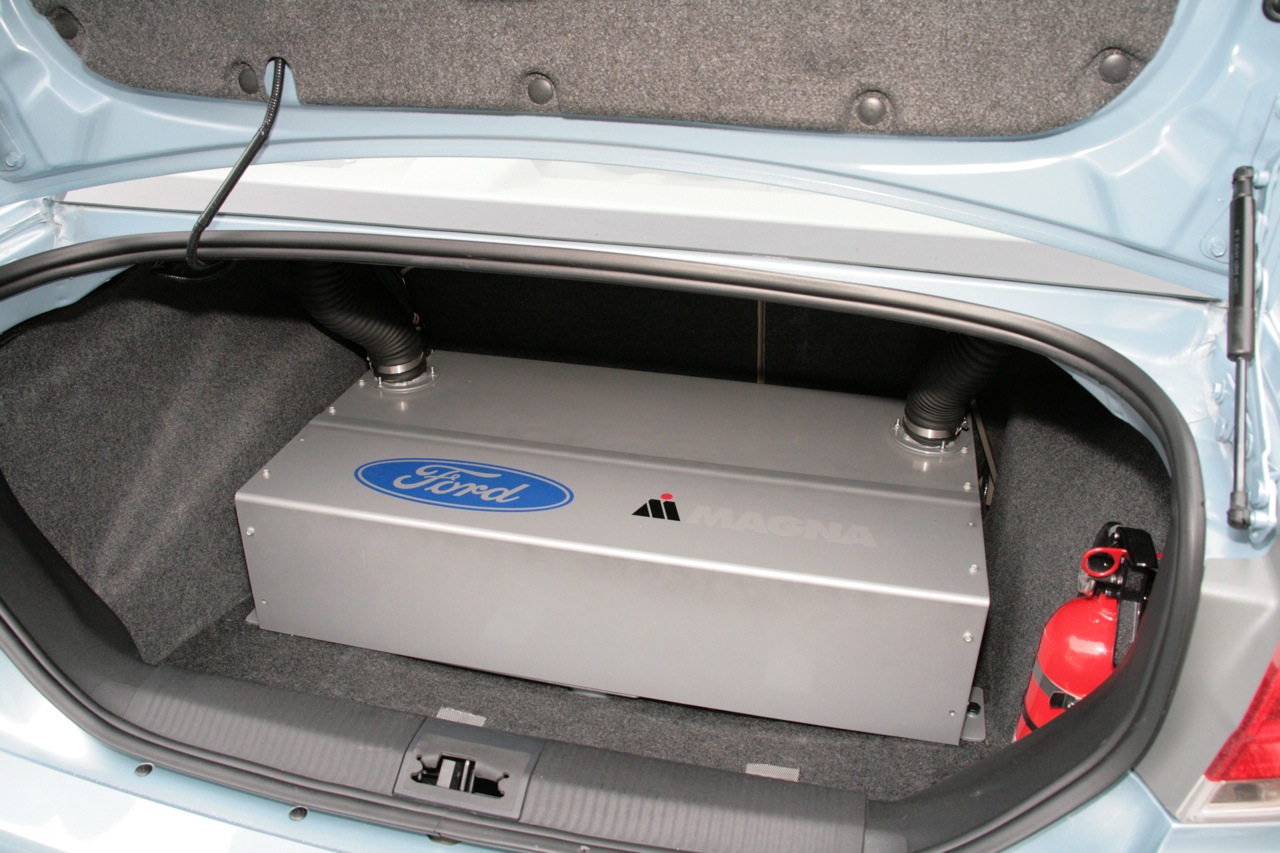
Focus EV to use Liquid Cooled Battery


Ford announced September 2 its Focus Electric, due out next year in the U.S., will contain a lithium ion battery pack with a liquid-based thermal management system.

Ford will use for the Focus a lithium-ion battery pack which will use heated and cooled liquid to handle one of the most dreaded things in an EV: overheating batteries. The liquid will be used by the car to keep the heat level to a minimum, hence increasing both the range and life span of the pack.

Ford is still developing the car, but the prototype we drove had a 23 kilowatt-hour lithium ion pack, which makes it about the size of the air-cooled pack in the Nissan Leaf. By using active thermal management, Ford says it will maximize battery life and range and optimize charging by heating, or cooling, the pack to the best temperature before pulling juice from the grid.

The introduction of this type of electronic cooling, will extend the batteries lifespan and also help to gain the maximum performance. By keeping the cells cool the active thermal management will be able to prevent the likelihood of cracks in the electrodes. These cracks can start to effect the batteries power and reduce the charge capabilities. On initial plug-in the management system will run a precondition of the batteries before it allows charging to begin.

The Focus Electric, which will be released in the U.S. late this year and in 2012 in Europe, is one of five electrified vehicles Ford will release over the next three years. The Ford Transit Connect Electric small commercial van arrives in late 2010, followed by two next-generation hybrid electric vehicles, as well as a plug-in hybrid electric vehicle in North America in 2012 and Europe in 2013.

Source: Ford


Ford Focus EV Ford Focus EV Ford Focus EV Ford Focus EV Ford Focus EV Ford Focus EV Ford Focus EV Ford Focus EV Ford Focus EV Ford Focus EV Ford Focus EV


Press Release

FORD USES INNOVATIVE LIQUID-COOLED BATTERY SYSTEM TO HELP FOCUS ELECTRIC OWNERS MAXIMIZE RANGE
  • The all-new Ford Focus Electric, which debuts in late 2011 in the U.S. and 2012 in Europe, will be powered by a lithium-ion battery system that utilizes cooled and heated liquid to regulate battery temperature, extend battery life and maximize driving range
  • The innovative thermal management technology helps the Focus Electric operate efficiently in a range of ambient temperatures
  • Focus Electric is one of five new electrified vehicles Ford will deliver over the next three years in North America and Europe. The Focus Electric will be built at Ford's retooled Michigan Assembly Plant
DEARBORN, Mich., Sept. 2, 2010 – The all-new Ford Focus Electric, which debuts in the U.S. late next year and in Europe in 2012, will be powered by an advanced lithium-ion battery that utilizes heated and cooled liquid to help maximize battery life and gas-free driving range.

Thermal management of lithium-ion battery systems is critical to the success of all-electric vehicles because extreme temperatures can affect performance, reliability, safety and durability. Ford has chosen an advanced active liquid-cooling and heating system to regulate the temperature of its lithium-ion battery packs, which are designed to operate under a range of ambient conditions.

"All-electric vehicles do not have a conventional engine on board, so it is critical we maximize the performance of the battery under various operating temperatures," said Sherif Marakby, Ford director, Electrification Program and Engineering. "Active liquid systems are more effective than air systems at regulating lithium-ion battery temperature. As a result, the active liquid system on Focus Electric will play a key role in providing our customers with the best performance possible."

The active liquid cooling and heating system also enables the Focus Electric to automatically precondition the battery pack temperature during daily recharging. When the vehicle is plugged in to the power grid, the vehicle system will be able to warm up the battery on cold days and cool it down on hot days.

The Focus Electric will be built at Ford's retooled Michigan Assembly Plant and will be available in late 2011. The vehicle will have an expected range of up to 100 miles and use no gasoline at all.

Battery thermal management in action
While air-cooling methods work well for many of today's smaller car battery systems, the larger, more complex lithium-ion battery technology powering Ford's all-electric vehicles calls for an aggressive thermal management system.

An active liquid system heats or chills a coolant before pumping it through the battery cooling system. This loop regulates temperature throughout the system against external conditions.

On hot days, chilled water absorbs heat from the batteries, dispersing it through a radiator before pumping it through the chiller again. On cold days, heated water warms the batteries, gradually bringing the system's temperature to a level that allows it to efficiently accept charge energy and provide enough discharge power for expected vehicle performance.

"Extreme temperatures impact a battery's life and performance, making it crucial to have an effective cooling and heating system to regulate temperature for these demanding applications," said Anand Sankaran, Ford executive technical leader, Energy Storage and HV Systems.

The liquid cooling system also plays a role in charging the vehicle. When the all-electric Focus is plugged in to recharge, the vehicle control system will automatically precondition the battery, if needed, to the optimal temperature before accepting charge. If the battery is already at the optimal temperature, the system will automatically accept charge and maintain an optimal temperature.

"We are working closely with our technology partners to accelerate the development of our lithium-ion battery systems to help our future EV customers get the most out of their vehicles," Marakby said. "Our goal is to build an electric vehicle that delivers on the quality and performance customers have come to expect from Ford."

Focus Electric is one of five electrified vehicles Ford will release over the next three years. In addition to the Focus Electric, the Ford Transit Connect Electric small commercial van arrives in late 2010, followed by two next-generation hybrid electric vehicles, as well as a plug-in hybrid electric vehicle in North America in 2012 and Europe in 2013.

Electrified vehicles are one part of Ford's broader strategy to offer a wide range of environmentally friendly, advanced technology solutions to improve fuel economy and lower CO2 emissions affordably for customers around the world.

Focus EV to use Liquid Cooled Battery


Ford announced September 2 its Focus Electric, due out next year in the U.S., will contain a lithium ion battery pack with a liquid-based thermal management system.

Ford will use for the Focus a lithium-ion battery pack which will use heated and cooled liquid to handle one of the most dreaded things in an EV: overheating batteries. The liquid will be used by the car to keep the heat level to a minimum, hence increasing both the range and life span of the pack.

Ford is still developing the car, but the prototype we drove had a 23 kilowatt-hour lithium ion pack, which makes it about the size of the air-cooled pack in the Nissan Leaf. By using active thermal management, Ford says it will maximize battery life and range and optimize charging by heating, or cooling, the pack to the best temperature before pulling juice from the grid.

The introduction of this type of electronic cooling, will extend the batteries lifespan and also help to gain the maximum performance. By keeping the cells cool the active thermal management will be able to prevent the likelihood of cracks in the electrodes. These cracks can start to effect the batteries power and reduce the charge capabilities. On initial plug-in the management system will run a precondition of the batteries before it allows charging to begin.

The Focus Electric, which will be released in the U.S. late this year and in 2012 in Europe, is one of five electrified vehicles Ford will release over the next three years. The Ford Transit Connect Electric small commercial van arrives in late 2010, followed by two next-generation hybrid electric vehicles, as well as a plug-in hybrid electric vehicle in North America in 2012 and Europe in 2013.

Source: Ford


Ford Focus EV Ford Focus EV Ford Focus EV Ford Focus EV Ford Focus EV Ford Focus EV Ford Focus EV Ford Focus EV Ford Focus EV Ford Focus EV Ford Focus EV


Press Release

FORD USES INNOVATIVE LIQUID-COOLED BATTERY SYSTEM TO HELP FOCUS ELECTRIC OWNERS MAXIMIZE RANGE
  • The all-new Ford Focus Electric, which debuts in late 2011 in the U.S. and 2012 in Europe, will be powered by a lithium-ion battery system that utilizes cooled and heated liquid to regulate battery temperature, extend battery life and maximize driving range
  • The innovative thermal management technology helps the Focus Electric operate efficiently in a range of ambient temperatures
  • Focus Electric is one of five new electrified vehicles Ford will deliver over the next three years in North America and Europe. The Focus Electric will be built at Ford's retooled Michigan Assembly Plant
DEARBORN, Mich., Sept. 2, 2010 – The all-new Ford Focus Electric, which debuts in the U.S. late next year and in Europe in 2012, will be powered by an advanced lithium-ion battery that utilizes heated and cooled liquid to help maximize battery life and gas-free driving range.

Thermal management of lithium-ion battery systems is critical to the success of all-electric vehicles because extreme temperatures can affect performance, reliability, safety and durability. Ford has chosen an advanced active liquid-cooling and heating system to regulate the temperature of its lithium-ion battery packs, which are designed to operate under a range of ambient conditions.

"All-electric vehicles do not have a conventional engine on board, so it is critical we maximize the performance of the battery under various operating temperatures," said Sherif Marakby, Ford director, Electrification Program and Engineering. "Active liquid systems are more effective than air systems at regulating lithium-ion battery temperature. As a result, the active liquid system on Focus Electric will play a key role in providing our customers with the best performance possible."

The active liquid cooling and heating system also enables the Focus Electric to automatically precondition the battery pack temperature during daily recharging. When the vehicle is plugged in to the power grid, the vehicle system will be able to warm up the battery on cold days and cool it down on hot days.

The Focus Electric will be built at Ford's retooled Michigan Assembly Plant and will be available in late 2011. The vehicle will have an expected range of up to 100 miles and use no gasoline at all.

Battery thermal management in action
While air-cooling methods work well for many of today's smaller car battery systems, the larger, more complex lithium-ion battery technology powering Ford's all-electric vehicles calls for an aggressive thermal management system.

An active liquid system heats or chills a coolant before pumping it through the battery cooling system. This loop regulates temperature throughout the system against external conditions.

On hot days, chilled water absorbs heat from the batteries, dispersing it through a radiator before pumping it through the chiller again. On cold days, heated water warms the batteries, gradually bringing the system's temperature to a level that allows it to efficiently accept charge energy and provide enough discharge power for expected vehicle performance.

"Extreme temperatures impact a battery's life and performance, making it crucial to have an effective cooling and heating system to regulate temperature for these demanding applications," said Anand Sankaran, Ford executive technical leader, Energy Storage and HV Systems.

The liquid cooling system also plays a role in charging the vehicle. When the all-electric Focus is plugged in to recharge, the vehicle control system will automatically precondition the battery, if needed, to the optimal temperature before accepting charge. If the battery is already at the optimal temperature, the system will automatically accept charge and maintain an optimal temperature.

"We are working closely with our technology partners to accelerate the development of our lithium-ion battery systems to help our future EV customers get the most out of their vehicles," Marakby said. "Our goal is to build an electric vehicle that delivers on the quality and performance customers have come to expect from Ford."

Focus Electric is one of five electrified vehicles Ford will release over the next three years. In addition to the Focus Electric, the Ford Transit Connect Electric small commercial van arrives in late 2010, followed by two next-generation hybrid electric vehicles, as well as a plug-in hybrid electric vehicle in North America in 2012 and Europe in 2013.

Electrified vehicles are one part of Ford's broader strategy to offer a wide range of environmentally friendly, advanced technology solutions to improve fuel economy and lower CO2 emissions affordably for customers around the world.